November 17, 2026 - Dining
How to Choose a Dining Table: Size, Shape & Material
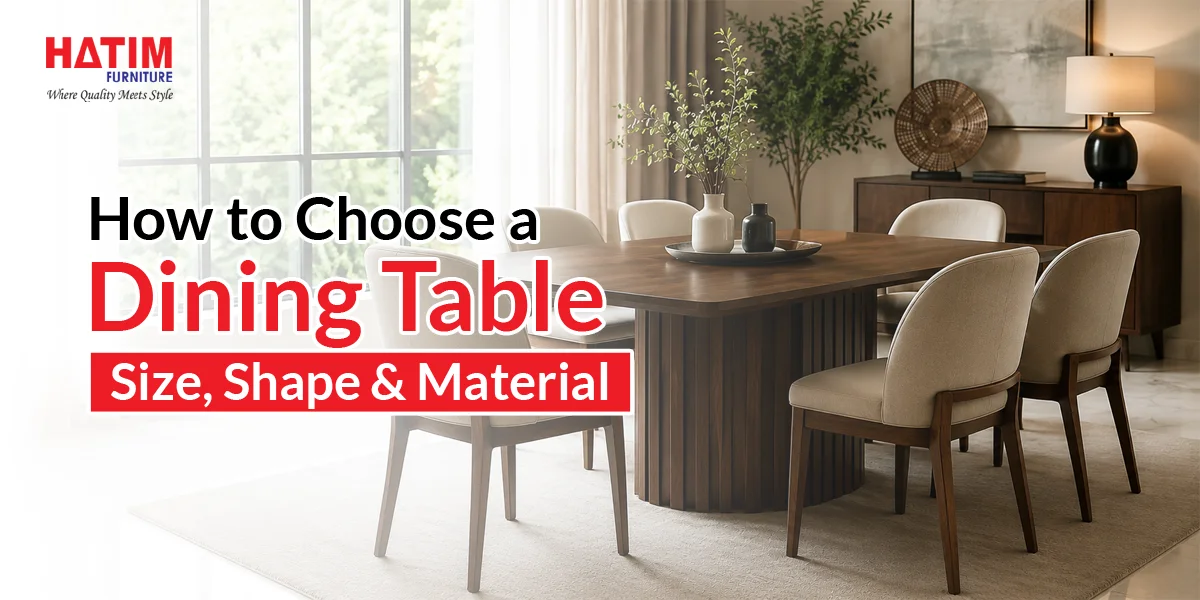
Knowing how to choose a dining table starts with your room's measurements, not the table you like most in the showroom. Get the size wrong and even a beautiful table will feel cramped or lost in the space. It means matching the table to your room, your family, and how you actually use it every day.
A dining table is more than a place to eat. It's where kids do homework, families share daily meals, and relatives gather during Eid. That's why size, shape, material, and seating capacity all matter as much as looks.
In Bangladesh, many people buy a dining table based on appearance or price alone. Later, they find out it's too large for the room, too small for the family, or hard to maintain in our humid climate. A little planning before you buy avoids all three problems.
Whether you need a dining table for small space in an apartment or a large table for a spacious home, the right choice gets easier once you know what to look for.
This blog answers, what size dining table do I need, which shape suits your room, and what's the best material for a dining table use in Bangladesh's weather. Six practical steps, covering size, shape, material, chairs, and long-term care, and you'll know exactly what to look for before you walk into a showroom.
Step 1: Measure Your Space First
Before you look at a single table design, measure your dining room. This one step prevents almost every sizing mistake people make, and it takes less time than browsing a single furniture catalog.
Room Dimensions and Clearance
Measure the length and width of your dining area first, using a tape measure rather than guessing by eye. Then leave enough clearance around the table for chairs to pull out and people to walk past comfortably. The standard rule is at least 36 inches (91 cm) of clearance on all sides. Anything less, and people start bumping into walls or sideboards every time they get up mid-meal.
To find your maximum table size, subtract 6 feet from both your room's length and width. So a 12 x 9 foot dining room leaves room for a table up to 6 x 3 feet. If your space is tighter than that, size down rather than force a large table into a room it doesn't fit.
Don't Forget the Extended Footprint
If you're considering an extendable table, measure it fully extended, not just in its everyday, closed-up size. This is where a lot of buyers get caught out later.
A table that fits perfectly closed can suddenly need another 20 to 24 inches of length once you pull out the leaf for guests. Check that your room and your 36-inch clearance space, still works at full extension before you buy. It's a five-minute check that saves an awkward surprise the first time relatives visit for Eid.
Step 2: Decide How Many People You Need to Seat
This step decides almost everything else about the table - size, shape, and even material. It's worth thinking through properly before you start comparing designs.
Everyday Use vs. Entertaining Capacity
Think about two things - how many people eat at your table on a normal Tuesday, and how many you seat during Eid or a big family gathering. For most households, these two numbers aren't the same, and that gap matters more than people expect.
If those two numbers are very different, an extendable or expandable table solves the gap without permanently taking up floor space you don't need day to day. It's a more practical solution than buying the largest table you can fit, just in case.
A Simple Seating-by-Size Reference Table
Dining table size guide charts vary slightly by source, but the ranges below reflect the most common standards used by furniture makers. Use it as a starting reference, then adjust slightly based on your room's exact measurements.
| Seats | Rectangular (L x W) | Round (Diameter) |
| 4 | 48-60 in (122-152 cm) x 30-36 in | 42-48 in (107-122 cm) |
| 6 | 72-80 in (183-203 cm) x 36-40 in | 54-60 in (137-152 cm) |
| 8 | 84-96 in (213-244 cm) x 40-44 in | 72 in (183 cm) |
| 10 | 96-120 in (244-305 cm) x 44-48 in | 78-84 in (198-213 cm) |
A 6 seater dining table in this range gives each person close to 24 inches of elbow room, the minimum most people need to eat comfortably without bumping arms. Browse HATIM’s 6-seater dining sets to compare designs in this size.
Extended Families and Festival Entertaining
Bangladeshi households often need to seat more people a few times a year than they do every day, especially around Eid, weddings, or when relatives visit from out of town. Planning for this now saves you from scrambling for extra chairs later.
An extendable table, or a fixed 6-seater with two folding chairs kept in storage, both solve this without buying a table sized for 10 that sits mostly empty the rest of the year.
Step 3: Choose the Right Shape for Your Room
Shape isn't just a style choice. It changes how much space the table actually needs and how people move around it once they're seated.
Rectangular and Oval Tables
Rectangular tables are the most common choice, and for good reason. They fit long, narrow dining rooms well, seat the most people for their footprint, and work naturally against a wall if space is tight.
Oval tables offer the same seating logic with softer corners, which helps in rooms where people walk close to the table's edges. If you've ever bruised a hip on a sharp table corner in a tight dining space, this is the shape that fixes it.
Round and Square Tables
Round and square tables work best in square-shaped rooms or open-plan spaces where the table sits in the middle rather than against a wall. They also change the feel of a meal, not just the floor plan.
Round tables remove the idea of a "head" of the table, which some families prefer for a more equal, conversational feel. The tradeoff is that round tables seat fewer people per square foot than rectangular ones, so they suit smaller, closer-knit gatherings better than large ones.
A Quick Decision Rule
If you're standing in a showroom and can't decide, this shortcut works almost every time. It's the same logic experienced furniture sellers use when a customer describes their room over the phone.
If you have a long, narrow room, choose rectangular or oval or if you have square room or open floor plan, choose round or square. If you're still unsure, rectangular is the safer default, since it fits the widest range of room shapes and seats the most people for its size.
Step 4: Pick a Material That Matches Your Household
Material decides how long your table lasts and how much upkeep it needs, which matters even more in Bangladesh's humid climate than it does elsewhere. This is the step where price and durability start pulling in different directions.
Solid Wood (Mahogany, Red Oak)
Solid hardwood lasts the longest of all dining table materials when it is properly sealed. Mahogany is fairly stable in humid weather, while red oak is hard-wearing but more porous, so it needs a good finish. All solid wood expands and shrinks slightly with humidity, so keep it away from damp walls.
Expect a higher upfront cost, but it’s the material families tend to keep for decades rather than replace after a few years.
Engineered Wood/Veneer
Engineered wood with a veneer finish gives you a similar look to solid wood at a lower price point. It's a solid middle-ground choice for families who want the appearance of wood without the full cost of solid hardwood.
HATIM’s wooden dining tables use mahogany and red oak veneered engineered wood, which gives the look of these hardwoods at a lower price. HATIM’s 6-seater dining tables currently start at around ৳29,700 for wooden-top models and go up to about ৳94,400 for marble-top designs.
It holds up reasonably well with normal use, though it's more sensitive to standing water and heavy humidity than solid wood. If your dining area sits near a window or an exterior wall, this is worth factoring in before you decide.
Glass Tops
Glass-top tables are easy to clean, reflect light nicely in smaller rooms, and don't absorb moisture at all, which makes them a genuinely practical option for Bangladesh's rainy season. Many buyers pick glass for exactly this reason without realizing it doubles as a monsoon-friendly choice.
The tradeoff is that scratches and fingerprints show more than they would on a wood surface, so glass needs more frequent wiping to look its best, especially with young children at the table.
Metal-Framed Tables
Metal-framed tables, usually paired with a wood or glass top, offer a sturdier base and a more modern look than an all-wood design. They're a common choice for smaller apartments where a slimmer frame visually opens up the room.
Rust is the main risk in a humid climate, so look for a proper protective coating before you buy. HATIM's metal dining chairs use a zinc-phosphate coated epoxy finish for exactly this reason, and the same principle applies to metal table frames, ask about the coating type before assuming all metal finishes are equal.
Step 5: Match Your Chairs to Your Table
The right chairs make a table comfortable. The wrong ones make even a beautiful table hard to enjoy, no matter how good it looks in the room.
Seat Height and Legroom
Getting this measurement wrong is one of the most common, and most avoidable, mistakes buyers make when they purchase a table and chairs separately. Standard dining table height is 28 to 30 inches.
Pair this with chairs at 17 to 19 inches of seat height, which leaves roughly 10 to 12 inches of clearance between the seat and the tabletop. That gap is what gives your knees room to move without hitting the underside of the table during a long meal.
Elbow Room Between Chairs
Each diner needs about 24 inches of width to eat comfortably without elbowing the next person. This number matters more than people expect once everyone actually sits down together.
When you're placing chairs, measure the space between chair centers, not just how many chairs technically fit along the table's edge. Cramming in one extra chair often costs more comfort than it's worth, especially for meals that run long.
Matching vs. Mixing
Chairs don't have to match the table exactly. This is one of the more common questions buyers ask when a store's matching set doesn't fit their existing decor.
Coordinating the wood tone, finish, or color family creates a look that feels intentional rather than mismatched. If you want a more curated look, mixing two chair styles, like head chairs in one design and side chairs in another, is common in dining rooms today and does not clash as long as the finishes are related.
Step 6: Think About Long-Term Care
The table you choose today needs a maintenance plan for Bangladesh's climate, especially through the monsoon months, and this is where material choice quietly pays off or costs you later.
Solid wood needs an annual coat of varnish or wax and should stay clear of damp walls. Metal frames need a quick wipe whenever they get wet, since scratches in the coating are where rust starts. Glass just needs regular cleaning to stay clear and free of watermarks. If durability through humid seasons is a priority, the material you pick in Step 4 decides how much of this work you'll actually be doing every monsoon.
Final Thoughts
Choosing a dining table comes down to six practical decisions: your room's size, how many people you need to seat, the right shape, a material suited to your climate, chairs that actually fit the table, and a realistic plan for care. Get these six right, and the table you buy will serve your family for years, not just look good on delivery day.
If you're ready to compare options, HATIM Furniture's dining table and dining chair collections cover the full range from budget-friendly to premium solid wood, so you can match a table you've now measured properly to a set that actually fits your home.
Common Questions Before Buying a Dining Table
01. What size dining table do I need for 6 people?
A rectangular table around 72 to 80 inches long and 36 to 40 inches wide works well for 6 people. If you prefer round, look for a 54 to 60 inch diameter. Either size gives each person close to 24 inches of elbow room, which is the comfort standard most furniture makers use.
02. Is a round or rectangular dining table better for a small room?
For a small room, the round vs rectangular dining table choice depends on the room’s shape. A round table suits a small square room because it has no sharp corners and is easy to move around. In a narrow room, a rectangular table pushed against a wall saves more space.
03. What is the standard height of a dining table?
Standard dining table height is 28 to 30 inches. This pairs comfortably with chairs at 17 to 19 inches of seat height, leaving about 10 to 12 inches of legroom clearance underneath the table.
04. How much space should I leave around a dining table?
Leave at least 36 inches of clearance on all sides. This gives enough room to pull out chairs fully and walk past people who are seated, without anyone feeling boxed in.
05. What's the most durable material for a dining table in a humid climate?
Well-sealed solid hardwood, such as mahogany, holds up best long-term and ages well with a yearly coat of varnish or wax. Glass tops are also a strong option since they don't absorb moisture at all, though they need more frequent cleaning.
06. Do dining chairs need to match the table?
No. Chairs just need to coordinate through wood tone, finish, or color so the set feels intentional. Many households mix chair styles, like different head and side chairs, as long as the materials relate to each other.
07. Should I buy an extendable dining table?
Yes, if your household regularly needs more seats for guests or festivals than for everyday meals. An extendable table gives you a compact everyday footprint with the option to expand for larger gatherings, without buying a permanently large table that sits half-empty most of the year.