November 18, 2026 - Kids'spaces
How to Set Up an Ergonomic Home Study Table for Kids
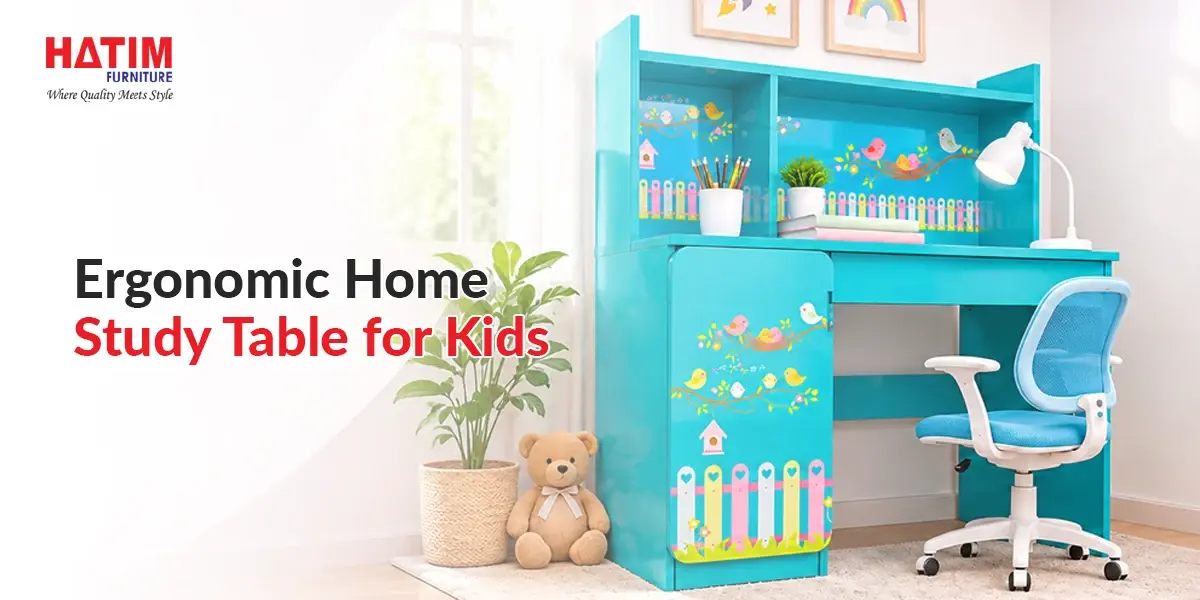
An ergonomic study table for kids is a table and chair set that fits your child’s body, so they can sit upright with feet supported, shoulders relaxed and forearms resting on the desk. Because children grow quickly, the right setup comes from measuring your child, not guessing by age.
This may sound like a small detail, but the wrong table or chair can make a child bend forward, raise their shoulders, or leave their feet unsupported while studying. These problems can become more noticeable as the child grows.
Many parents in Bangladesh buy one study table and expect it to last for years. But children grow quickly. A table that fits a six-year-old may not fit the same child properly at age ten.
This blog covers the 90-90-90 rule, study table height by age, and whether a fixed or adjustable table makes more sense for a Bangladeshi home. Then the chair, the lighting, and how to fit all of it into a proper study corner.
Why Ergonomics Matters for Kids, Not Just Adults
Children spend long hours at a desk while their bodies are still growing. Researchers who measured 300 primary school students in Khulna note that poorly fitting furniture can cause discomfort and musculoskeletal problems (study). Furniture that fits makes good posture easier to keep.
Poor desk posture for children also shows up outside the body. Kids who sit awkwardly get tired faster, fidget more, and lose focus sooner because part of their attention goes toward managing discomfort instead of the page in front of them. A few simple kids desk and chair posture tips, checked once and reused every evening, remove that distraction entirely.
The 90-90-90 Rule, The Core Ergonomic Principle
The 90-90-90 rule is a common starting guideline that children’s occupational therapists use to check seated posture. It means the knees bend at roughly 90 degrees with feet flat on the floor, the hips bend at roughly 90 degrees with the thighs parallel to the ground, and the elbows bend at roughly 90 degrees with the forearms resting flat on the desktop.
Occupational therapists at Children’s National Hospital recommend it when setting up a child’s desk at home. Others treat it as a starting point rather than a strict rule.
To apply the rule at home, you need one measurement called popliteal height. This is the distance from the floor to the back of your child's knee while they sit upright with thighs level.
That number tells you the exact chair seat height your child needs, and it is far more reliable than guessing based on age alone. If the chair is too tall for that number, a simple footrest for kids' desk setups fixes the gap so the feet do not dangle.
Study Table and Chair Height by Age (With a Simple Chart)
Age gives you a starting point, but children of the same age can differ in height by several inches, especially heading into the growth spurt years.
Use the ranges below to shortlist options, then confirm with the popliteal height measurement before you buy.
| Age Group | Typical Height | Desk Height | Chair Seat Height |
| 4 to 6 years | 100 to 115 cm | 46 to 51 cm (18 to 20 in) | 25 to 30 cm (10 to 12 in) |
| 7 to 10 years | 115 to 137 cm | 51 to 61 cm (20 to 24 in) | 30 to 35 cm (12 to 14 in) |
| 11 to 14 years | 137 to 160 cm | 61 to 66 cm (24 to 26 in) | 35 to 40 cm (14 to 16 in) |
This study table height chart matches the standard sizes most kids reading table Bangladesh stores stock, but always treat it as a starting range rather than a fixed rule.
Ages 4 to 6 (Early Primary)
At this age, children are just building the habit of sitting down to study, so comfort matters more than desk size. A compact table paired with a low chair and a footrest usually fits better than a full-size desk that a five-year-old will grow into slowly.
HATIM Furniture's reading tables designed for younger kids come in shorter heights that match this range without needing extra risers or cushions.
Ages 7 to 10 (Primary/Junior)
This is the range where homework load increases and children start spending real time at the desk each evening. A slightly wider desktop helps here, since kids this age juggle textbooks, notebooks, and stationery at once, and a cramped surface leads to slouching just to reach across it.
This is also the stage where growth speeds up, so checking the height every six months keeps the setup accurate, and a themed pick like the Lion in a Jungle reading table tends to keep younger kids in this bracket excited about sitting down each evening.
Ages 11 to 14 (Secondary)
Secondary-age children study for longer stretches and often need room for a laptop alongside books, which calls for a deeper desktop and firmer back support in the chair.
Growth slows down for many children in this bracket compared to the 7 to 10 stage, so a well-chosen table like the Gen Z reading table can often last two to three years without needing a swap.
Fixed-Height vs. Adjustable Study Tables, What Actually Makes Sense for a Bangladeshi Home
An adjustable study desk sounds like the obvious answer since it grows with the child and avoids repeat purchases. In practice, most Bangladeshi households weigh this against upfront cost, and a full electric or gas-lift adjustable desk sits well above what a fixed wooden table costs locally.
A fixed-height table is not a compromise if you choose it with the age chart above in mind and pair it with an adjustable chair or a footrest to fine-tune the fit.
This combination covers most of what an adjustable desk offers at a fraction of the price, and it holds up well through Dhaka's humidity when built from solid or engineered wood rather than cheaper particleboard.
For smaller rooms or children who are likely to outgrow a table quickly, a lightweight folding option like the foldable reading table built for compact spaces gives you flexibility without the higher price tag of a full adjustable system.
Choosing the Right Study Chair
The chair matters as much as the table, and it is the piece parents most often skip when setting up a study corner for kids.
A well-built kids reading chair is worth comparing on kids study chair Bangladesh price lists before you buy, since sizing it correctly for popliteal height, with real back support, does more for posture than an expensive desk ever will on its own.
Seat Depth and Back Support
Seat depth should let your child's back touch the backrest while leaving a small gap, roughly two to three fingers wide, between the front edge of the seat and the back of their knees. A back support chair for children should curve gently to hold the lower back, since a flat or overly stiff backrest pushes kids to lean forward and lose the posture the desk height was set up to protect.
Why a Regular Dining or Plastic Stool Falls Short
A dining chair or plastic stool is built for adult proportions and short meals, not hours of homework. Kids end up perched with feet dangling, no back support, and a seat depth that either cuts into the back of their knees or leaves them sliding forward to reach the table, both of which undo everything the 90-90-90 rule is meant to achieve.
Positioning the Table for Lighting, Placement, and Room Layout
Where the table sits in the room affects a child's focus and eyesight just as much as the furniture itself. Getting this part of the kids' study table setup, Bangladesh homes rely on right takes a few minutes of planning and costs nothing extra if you do it before the table arrives.
Natural Light and Window Placement
Place the desk beside a window rather than directly facing it, so daylight falls across the desktop instead of into your child's eyes.
For right-handed children, light should come from the left side to avoid hand shadows falling across the page, and the reverse applies for left-handed children.
Task Lighting for Evening Study
Good task lighting for study sessions after dark comes from a dedicated lamp rather than the room's ceiling light, which usually leaves the desktop dimmer than the rest of the space.
A warm-white LED desk lamp positioned on the opposite side from the child's writing hand gives even, shadow-free light and holds up well through Bangladesh's frequent evening load-shedding if paired with a rechargeable model.
Placement in a Shared Bedroom (A Very Common Bangladeshi Household Layout)
Most homes in Bangladesh do not have a spare room for a dedicated study, so the desk usually shares space with siblings, a bed, and sometimes a wardrobe. Learning how to set up a study corner for kids in this kind of shared bedroom study space starts with one simple move.
Position the table facing a wall rather than the bed or door, since fewer visual distractions in the child's line of sight make a real difference in how long they stay focused.
Storage and Keeping the Study Area Clutter-Free
A cluttered desktop pulls a child's attention away from homework and often pushes them to write in awkward positions just to find clear space. A study table with storage for kids, or a small cupboard placed beside the desk, solves this without needing a bigger room.
Keep only the books and stationery needed for that day's homework on the desktop itself, and move everything else, old notebooks, art supplies, and toys, into dedicated storage. HATIM Furniture's kids cupboard range is sized to sit comfortably beside a study table without crowding the room, a small setup that goes a long way for kids furniture Bangladesh homes actually have space for, and for older children the teenage cupboard collection gives a bigger option that pairs naturally with a secondary-age desk.
A Simple Setup Checklist for Parents
Before you call the study corner finished, run through this quick list. Each point takes only a minute to check, but skipping even one usually shows up as slouching or complaints within the first week.
- Measure popliteal height first: Skip guessing by age and measure the actual distance from floor to knee crease.
- Confirm the 90-90-90 fit: Sit your child down and check knees, hips, and elbows once the table and chair are in place.
- Add a footrest if feet dangle: Feet that dangle make it harder to sit upright through a full study session.
- Position the desk away from the bed and door: Fewer distractions in the line of sight help focus last longer.
- Set up a dedicated desk lamp: Do not rely on the room's main light for evening homework.
- Keep only today's materials on the desktop: Store everything else in a nearby cupboard or shelf.
- Recheck the fit every six months: Children grow fast enough that last year's perfect height can be wrong by spring.
Final Thoughts
Setting up an ergonomic study table for kids does not need to be expensive or complicated, but it does need to be measured rather than guessed.
Once the height, chair, lighting, and storage are sorted, the desk stops being a source of slouching and starts doing what it was meant to do, giving your child a comfortable place to focus.
HATIM Furniture offers reading tables in several sizes, and the full reading table collection covers everything from compact folding models to teen-sized desks.
Most Common FAQs on Ergonomic Study Table for Kids
1. What is the correct study table height for a child by age?
As a starting range, children aged 4 to 6 need a desk around 18 to 20 inches high, ages 7 to 10 need 20 to 24 inches, and ages 11 to 14 need 24 to 26 inches. Always confirm with your child's actual popliteal height rather than relying on age alone, since growth varies a lot between children.
2. What is the 90-90-90 rule for kids' desk posture?
It means the knees, hips, and elbows should each bend at roughly 90 degrees when your child sits at the desk, with feet flat on the floor or a footrest. This posture keeps the spine neutral and reduces the strain that comes from reaching up, hunching down, or dangling feet.
3. Do I need an adjustable-height desk, or is a fixed-height table okay?
A fixed-height table works fine if you choose the size based on your child's current measurements and pair it with an adjustable chair or footrest. Adjustable desks are convenient but cost significantly more, and most families get the same posture benefit from a well-sized fixed table.
4. Can a child use a regular dining chair or stool to study?
Not comfortably for long study sessions, since dining chairs and stools are built for adult proportions and short use. They usually leave a child's feet dangling with no back support, which works against the posture a proper study setup is meant to protect.
5. How do I measure the right chair height for my child at home?
Have your child sit upright on a flat surface with thighs level and feet unsupported, then measure the vertical distance from the floor to the back of their knee. That number is the popliteal height, and it should match the chair's seat height so their feet rest flat without the seat edge pressing into their thighs.
6. Where should a study table be placed in a shared bedroom?
Face the desk toward a wall rather than the bed, door, or a shared sibling's play area, so there is less to look at besides the desk itself. Natural light from the side, not glare from a facing window, also helps keep the spot usable through the day.